
Male rhinoplasty has become one of the fastest-growing cosmetic procedures worldwide. As more men seek facial refinement without compromising masculine features, rhinoplasty for men has evolved into a specialized surgical approach that prioritizes facial harmony while preserving strong, natural characteristics. Unlike traditional cosmetic procedures that may focus primarily on reducing size, male rhinoplasty requires careful planning to maintain a masculine nasal profile. Every aspect of the surgery—from the bridge height to the nasal tip angle—must complement the patient’s facial anatomy rather than follow a universal aesthetic standard. Whether performed for cosmetic enhancement, functional improvement, or both, rhinoplasty for men can significantly improve facial balance, breathing function, and self-confidence when performed by an experienced facial plastic surgeon.
What Is Male Rhinoplasty?
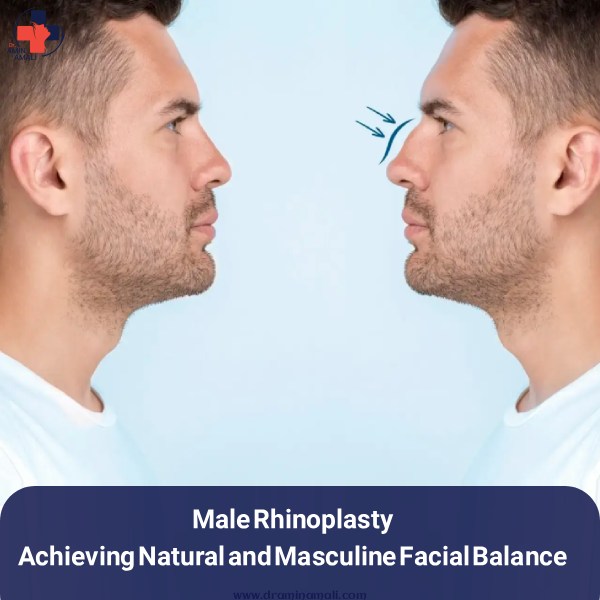
Male rhinoplasty is a surgical procedure designed to reshape or reconstruct the nose while maintaining masculine facial proportions. Although the surgical techniques are similar to those used in female rhinoplasty, the aesthetic goals differ considerably.
The objective is not to create a smaller or overly refined nose but rather to achieve a nose that:
- Fits naturally with masculine facial features
- Preserves structural strength
- Improves symmetry
- Corrects functional breathing issues
- Enhances overall facial balance
Because men generally have thicker skin, stronger cartilage, and more prominent facial bones, surgeons must adapt their techniques accordingly to produce natural-looking outcomes.
How Is Rhinoplasty for Men Different from Female Rhinoplasty?
One of the biggest misconceptions is that rhinoplasty techniques are identical regardless of gender. In reality, male rhinoplasty requires a completely different aesthetic philosophy.
Some of the primary differences include:
Straighter Nasal Bridge
Men typically have a straighter nasal bridge, whereas women often desire a subtle concave profile.
Less Rotated Nasal Tip
An excessively elevated nasal tip can create a feminine appearance. During rhinoplasty for men, surgeons usually maintain a lower tip rotation to preserve masculine facial characteristics.
Stronger Nasal Projection
Male noses generally project farther from the face. Maintaining appropriate projection helps preserve facial balance.
Preservation of Masculine Features
Rather than creating a delicate nose, the rhinoplasty surgeon focuses on refining imperfections while keeping the nose proportionate to broader facial features such as the jawline, forehead, and chin.
Benefits of Male Rhinoplasty
When carefully planned and expertly performed, rhinoplasty offers benefits that extend beyond cosmetic enhancement.
These include:
- Improved facial harmony
- Better nasal breathing
- Increased confidence
- Correction of post-traumatic deformities
- Long-lasting aesthetic improvement
- Better balance between facial features
- Enhanced profile appearance
The most successful results appear natural, making the nose blend seamlessly with the rest of the face.
Common Reasons Men Choose Rhinoplasty
Every patient’s motivation is unique, but several concerns frequently lead men to consider rhinoplasty.
Cosmetic Reasons
Many men seek surgery to address:
- A prominent dorsal hump
- Crooked nasal appearance
- Wide nasal bridge
- Bulbous nasal tip
- Asymmetrical nose
- Large nose relative to facial proportions
- Previous injury affecting appearance
Functional Reasons
Male rhinoplasty is also commonly performed to improve breathing problems caused by:
- Deviated septum
- Nasal valve collapse
- Previous nasal trauma
- Congenital structural abnormalities
- Chronic nasal obstruction
In many cases, cosmetic refinement and functional correction can be performed during the same operation.
Who Is a Good Candidate for Male Rhinoplasty?
An ideal candidate is someone who has realistic expectations and wishes to improve the appearance or function of the nose without drastically altering their identity.
Good candidates generally:
- Are in good overall health
- Have completed facial growth
- Do not smoke or are willing to stop before surgery
- Have stable expectations
- Understand both the benefits and limitations of surgery
- Experience cosmetic concerns or breathing difficulties
A thorough consultation helps determine whether rhinoplasty is the most appropriate treatment option.
Conditions That Can Be Corrected with Rhinoplasty for Men
Male rhinoplasty can successfully address numerous structural and cosmetic issues.
These include:
- Crooked nose
- Nasal asymmetry
- Dorsal hump
- Bulbous tip
- Wide nostrils
- Long nose
- Drooping nasal tip
- Deviated septum
- Breathing difficulties after trauma
- Congenital nasal deformities
- Previous unsuccessful rhinoplasty
The treatment plan is always customized according to each patient’s facial anatomy and personal goals.
The Male Rhinoplasty Procedure
The surgery typically begins with careful facial analysis. Rather than evaluating the nose alone, surgeons assess the relationship between the nose and surrounding facial structures. The procedure generally involves several steps:
- Administration of general anesthesia.
- Creation of either an open or closed surgical approach.
- Reshaping of bone and cartilage.
- Correction of internal structural abnormalities if necessary.
- Refinement of nasal symmetry.
- Closure of incisions.
- Placement of a protective splint.
Most procedures require between two and four hours, depending on complexity.
Open vs. Closed Male Rhinoplasty
Both surgical approaches have distinct advantages.
Open Approaches
Open rhinoplasty involves a small incision across the columella between the nostrils. Advantages include:
- Better surgical visibility
- Greater precision
- Ideal for complex corrections
- Preferred for revision procedures
Closed Approaches
All incisions remain inside the nostrils. Benefits include:
- No visible external scar
- Less postoperative swelling
- Faster initial recovery
- Suitable for less complicated cases
The appropriate technique depends entirely on the patient’s anatomy and surgical goals.
Recovery After Male Rhinoplasty
Recovery is gradual, and understanding the healing process helps patients maintain realistic expectations.
During the first week patients usually experience swelling, bruising around the eyes, mild discomfort and nasal congestion. The external splint is typically removed after approximately one week.
Weeks two to four most bruising resolves during this period, allowing many patients to return to work and social activities. However, strenuous exercise should still be avoided.
Choosing the Right Surgeon
Male rhinoplasty is both a technical and artistic procedure. Experience in preserving masculine facial anatomy is particularly important.
When selecting a surgeon, consider:
- Board certification
- Extensive rhinoplasty experience
- Before-and-after photographs of male patients
- Honest discussion of realistic outcomes
- Positive patient reviews
- Comprehensive consultation process
A skilled surgeon focuses on enhancing—not changing—your natural facial identity.
Frequently Asked Questions (FAQ)
Does male rhinoplasty leave visible scars?
Most scars become nearly invisible over time. Closed rhinoplasty leaves no external scars, while open rhinoplasty results in a small scar on the columella that typically heals very well.
Is rhinoplasty for men more difficult than female rhinoplasty?
Male rhinoplasty can be technically more demanding because of thicker skin, stronger cartilage, and the importance of preserving masculine facial characteristics.
Will my nose still look masculine after surgery?
When performed by an experienced surgeon, male rhinoplasty is specifically designed to maintain masculine proportions while improving facial harmony.
At what age can men have rhinoplasty?
Most surgeons recommend waiting until facial growth is complete, which usually occurs around 17–18 years of age, although the ideal timing varies by individual.
Are the results permanent?
Yes. Once healing is complete, the structural changes made during rhinoplasty are considered permanent, although natural aging continues to affect facial tissues over time.